
Garage Door Maintenance for Tallahassee Homes
Garage door maintenance is a yearly tune-up plus a few quick checks you do yourself. The tech tests balance and the safety reverse, tightens loose bolts, lubes moving parts and checks the seals.
Most doors give warning before they quit. The squeal gets louder. The door shakes on the way up. A strip of daylight shows under the bottom seal. A tune-up deals with those small things while they're still small.
Our climate makes it matter more. Wet summers rust hinges and springs. March pine pollen and red clay dust clog the tracks and sensor lenses. A door that gets looked at once a year tends to break on your schedule, not at 10 p.m. Find all Tallahassee garage door services on our home page.
What the Tech Checks During a Tune-Up
A proper tune-up is hands-on. The tech should run the door, stop it, feel it and listen to it.
Balance test
The tech pulls the release cord with the door closed and lifts it by hand. A balanced door stays put about halfway up. If it drifts down or shoots up, the springs are off. Spring adjustment is a tech-only job.
Safety reversal test
A board goes flat on the floor under the door. The door should touch it and reverse. If it pushes down on the board, the close force is set wrong.
Photo eye alignment
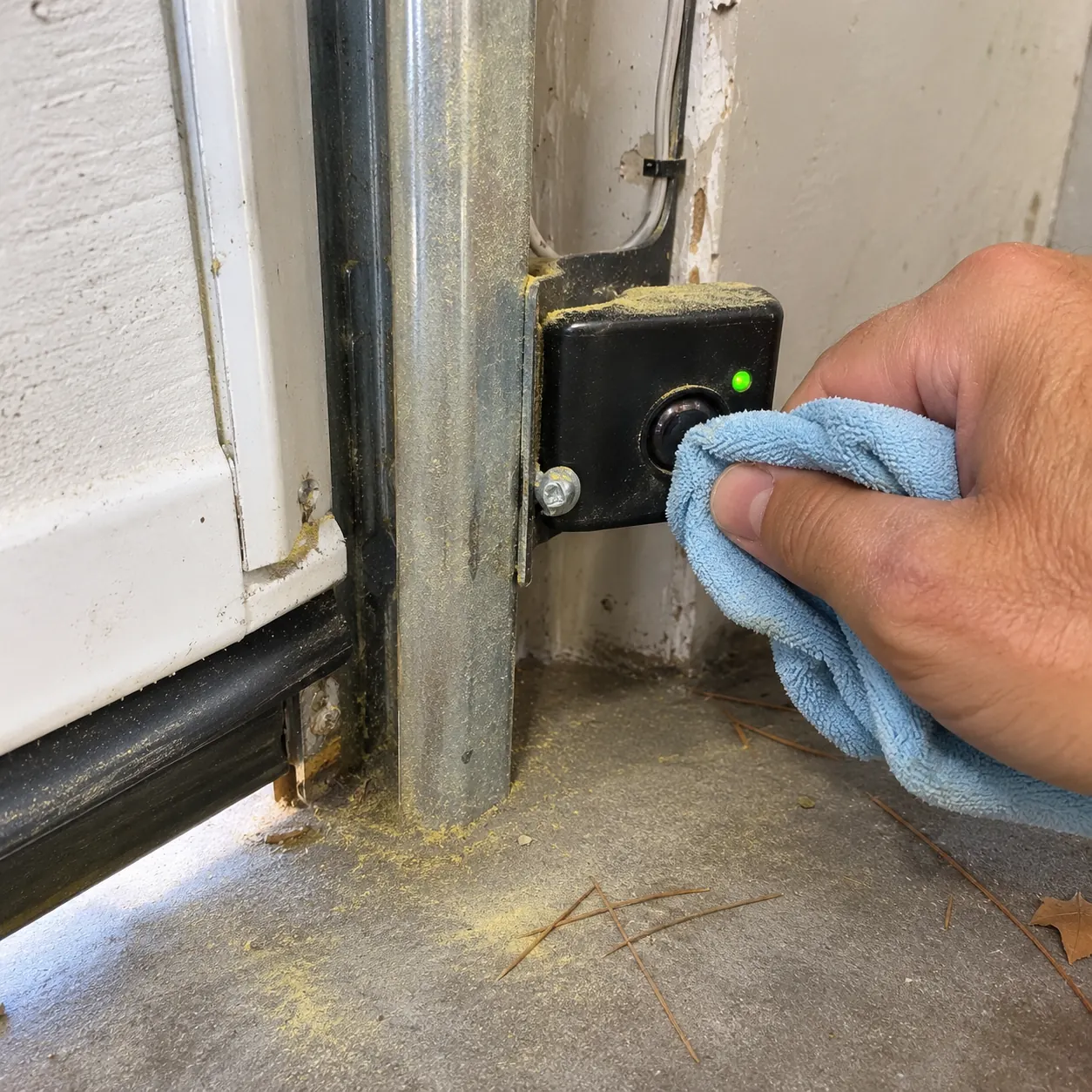
The two sensors near the floor need to face each other dead on. The tech wipes the lenses, lines up the brackets and checks that both lights glow steady.
Tighten hardware and lube
Every opening shakes the door a little, so hinge bolts and track bracket bolts work loose. The tech snugs them up. Then hinges, roller bearings and the spring coils get a light coat of garage door lube.
Rollers, seals and the opener
Cracked or wobbly rollers get flagged for swapping. The bottom seal and side weatherstrip get checked for gaps. Last, the tech looks at the opener's chain or belt, travel limits and force settings.
Signs Your Door Is Due for a Tune-Up
If two or more of these sound familiar, it's time.
Why Tallahassee Doors Need More Care
Garage door maintenance here fights heat, damp and dust most of the year. Each one hits a different part.
Humidity and rust. Summer air here is heavy and wet. DASMA's technical data sheets say springs should be kept dry to prevent rust. A thin coat of lube on the coils helps keep moisture off.
Pine pollen. In North Florida, pine pollen usually peaks in March. That yellow film coats the photo eye lenses and mixes with lube into a sticky paste in the rollers.
Red clay dust. The Red Hills soil blows into open garages and builds up in the bottom of the tracks. Sloped driveways in the Red Hills also leave gaps under one side of the bottom seal.
Storms. Tallahassee averages around 80 thunderstorm days a year. Wind-driven rain gets past a worn seal, and power surges hit opener boards.
Are Garage Door Tune-Ups Worth It?
For most homes, yes. A tune-up catches a worn spring or a fraying cable before it snaps. It also confirms the safety reverse still works.
A spring rarely breaks without warning. It rusts, loses tension and the door starts to feel heavy. A tech who handles your door once a year notices that. You get to plan a spring replacement for a weekday instead of finding a broken one before work.
The same goes for cables. A few broken strands near the bottom bracket are easy to spot during a tune-up. Left alone, the cable lets go and the door hangs crooked. That turns into a cable job plus possible track damage.
There's also the noise. Fresh rollers and lubed hinges can turn a door that wakes the house into one you barely hear.
Simple Checks You Can Do Each Month
These take about ten minutes. They don't need tools, and they don't touch anything under tension.
- Watch the door open and close once. Look for jerks, shakes or a tilt.
- Lay a 2x4 flat in the door's path and close it. It should reverse on contact.
- Wipe both sensor lenses with a soft cloth, more often during pollen season.
- Sweep the bottom of each track clear of clay dust, pine straw and leaves.
- Look at the cables near the bottom corners for broken strands or rust.
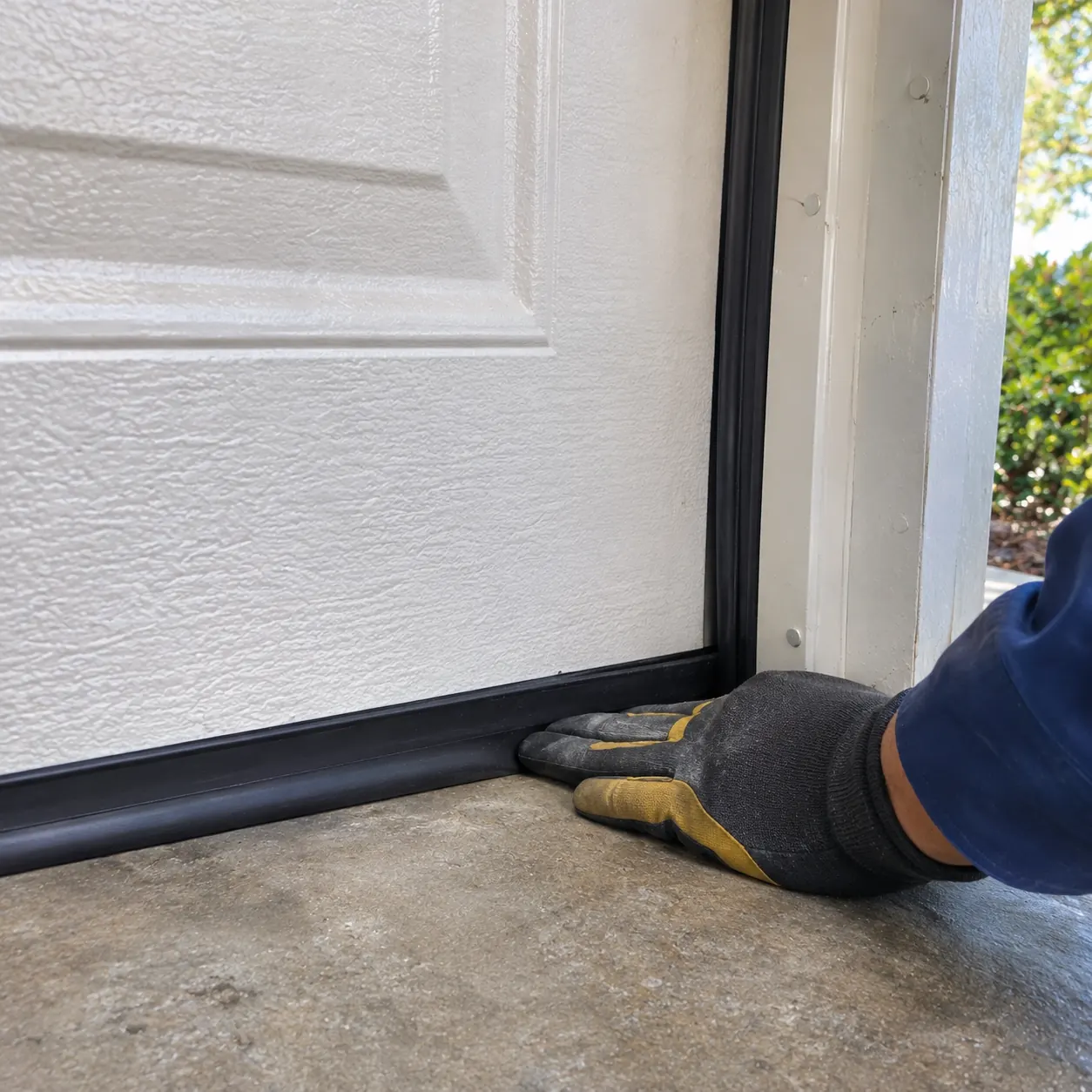
- Close the door and check for daylight along the bottom seal.
The reverse test comes from the CPSC garage door opener safety guide. If the door fails it, disconnect the opener until it's fixed.
Warning: Don't adjust springs, cables or bottom brackets yourself. They hold the door's full weight under high tension and can cause serious injury.
Our Process: From Your Call to a Quiet, Balanced Door
- You call and book a tune-upMention any noise, shaking or seal gaps you've noticed.
- We connect youYour call goes to an independent local garage door company. They set a time that suits you.
- The tech runs the door firstThey watch a full cycle and listen for grinding, popping or rubbing.
- Tests and adjustmentsBalance test, reverse test, photo eye alignment and a full bolt check.
- Lube and worn partsHinges, bearings and springs get lubed. Worn rollers or seals are quoted before swapping.
- A walk-through with youThe tech shows what they found and what to watch over the next year.
Before and After: Rusty Rollers Swapped for Sealed Nylon
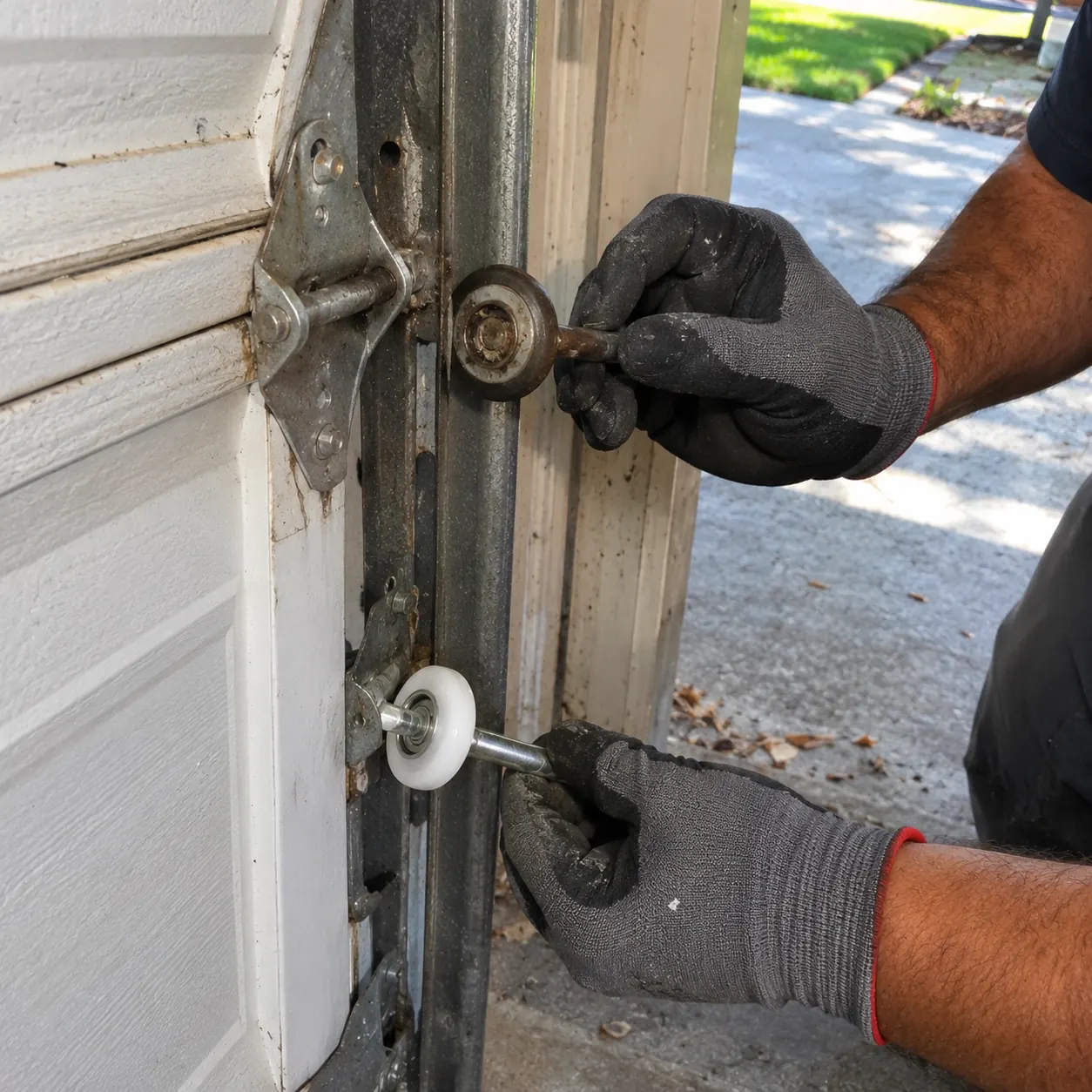
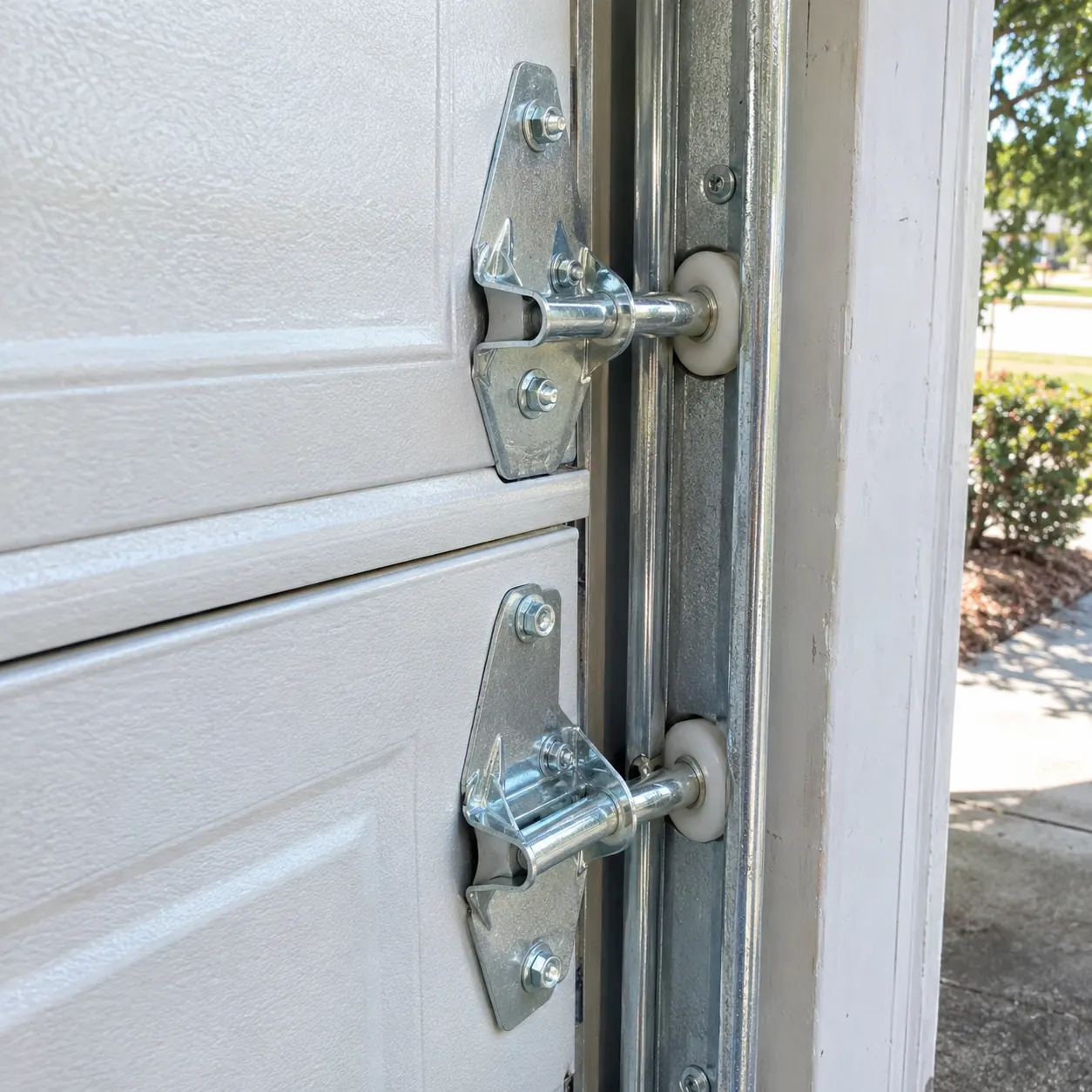
These steel rollers had rusted bearings and flat spots on the wheels. Every trip up the track came with a grind. The tech swapped the middle rollers for nylon ones with sealed bearings and snugged the hinge bolts.
After a swap like this, run the door a few times and listen. It should be close to silent. If a squeak comes back in a week, a hinge was missed.
How Often Should a Garage Door Be Serviced?
Plan on a pro check about once a year. Do the simple look-and-listen checks and the reverse test yourself every month.
Once a year suits most family homes. If your door is the main way in and out, it may cycle several times a day. Busy doors wear faster and some owners book every six months.
Timing helps too. Late spring, after the March pollen peak, is a good slot to clean sensors and lube. Early summer before hurricane season is another. FLASH suggests a yearly inspection and side locks or bracing before a storm.
Hinges, rollers and springs usually need fresh lube about twice a year. In damp years, look at the springs more often for rust.
What Affects the Cost of a Tune-Up
A basic tune-up is a set visit. These are the things that can add to it.
| Factor | Why it matters |
|---|---|
| Number of doors | A two-door garage takes longer than a single door. Ask if a second door is priced lower. |
| Roller swap | Replacing a full set of rollers adds parts and time on top of the check. |
| Seals and weatherstrip | A new bottom seal or side strips adds material, more so on a wide door. |
| Spring condition | If springs are rusty or out of balance, a spring job may be quoted on the spot. |
| Opener work | Adjusting limits is part of most tune-ups. Fixing a worn gear or board is extra. |
When a Tune-Up Turns Into a Repair
Sometimes the tech finds more than wear. A snapped spring, a cable off the drum or rollers out of the track means stop using the door.
When it can't wait
Door stuck open, hanging crooked or making a loud bang? Don't run the opener. Call and ask when the soonest slot is, or read our page on urgent door problems.
Call (850) 555-0167A door that grinds and tilts in the track may also need an off-track fix before any tune-up.
Tune-Ups Across Tallahassee Neighborhoods
Neighborhoods and nearby towns
In Killearn Estates, many homes date from the late 1960s to the 1980s. Older doors there often still run steel rollers and hinges that need regular lube. Under the oak cover in Betton Hills, leaves and pollen pile up in the tracks.
In SouthWood, homes built from 2002 on often still have builder rollers that are ready for an upgrade. Calls also come from Lake Jackson, Bradfordville, Havana and Monticello. Call and the company will confirm your address is in their area.
- Killearn Estates
- Betton Hills
- SouthWood
- Midtown
- Lake Jackson
- Bradfordville
- Havana
- Monticello
What Lubricant Should You Use on a Garage Door?
Use a spray made for garage doors, usually silicone or white lithium. Plain WD-40 is mostly a cleaner and won't last.
Spray the hinge pivots, the roller bearings and the spring coils. Wipe off any drips. A light coat is enough. Heavy grease catches clay dust and pollen and turns into grit.
Skip the tracks. The rollers should roll, not slide, so the track only needs a wipe with a dry rag. Grease in the track just collects dirt.
Nylon rollers with sealed bearings need little or no lube on the wheel itself. If yours still squeal after a fresh coat, the bearings are worn and the rollers need replacing.
More Questions About Garage Door Care
Do garage doors need regular maintenance?
Yes. Every cycle wears the moving parts a little. Our damp air also speeds up rust on springs, hinges and bottom brackets.
How many times a year should I lubricate garage door tracks?
None. Keep the tracks clean, not greased. Lube hinges, roller bearings and springs instead, about twice a year.
How do I test my garage door's auto-reverse?
Lay a 2x4 flat on the floor under the door and close it. The door should reverse when it hits the board. If it doesn't, unplug the opener and get it looked at.
How do I know if my garage door rollers need replacing?
Look for wheels that wobble, crack or have flat spots. Grinding, or a squeal that comes back days after lube, also means worn bearings.
Are nylon rollers better than steel rollers?
Nylon rollers with sealed bearings run much quieter. Bargain nylon ones without bearings can wear out fast, so ask what you're getting.
Can I replace garage door rollers myself?
Middle rollers are simpler. The bottom rollers sit in brackets under spring tension, and DASMA says those brackets are for trained techs only.
How should I prepare my garage door for hurricane season?
Get a yearly inspection before summer and fix worn parts. Ask about side locks or bracing. A door with no wind-load label may be worth replacing with a wind-rated door.
Related Garage Door Services
If the tune-up turns up a bigger problem, these pages cover the next step.